When I think about staying strong as I get older, there are plenty of things that immediately come to mind. Maintaining muscle, keeping my joints moving, protecting my balance, getting enough sleep and continuing to stay active are all fairly obvious.
Breathing muscles weren’t high on that list.
The more I learned about respiratory muscle training, though, the more I wondered why we rarely include breathing in conversations about maintaining physical conditioning as we age.
Breathing feels automatic because it is. We don’t have to consciously tell ourselves to inhale every few seconds.
But automatic doesn’t mean effortless.
Muscles are doing that work, and they have been doing it every minute of every day we’ve been alive.
We Have Muscles for Breathing Too
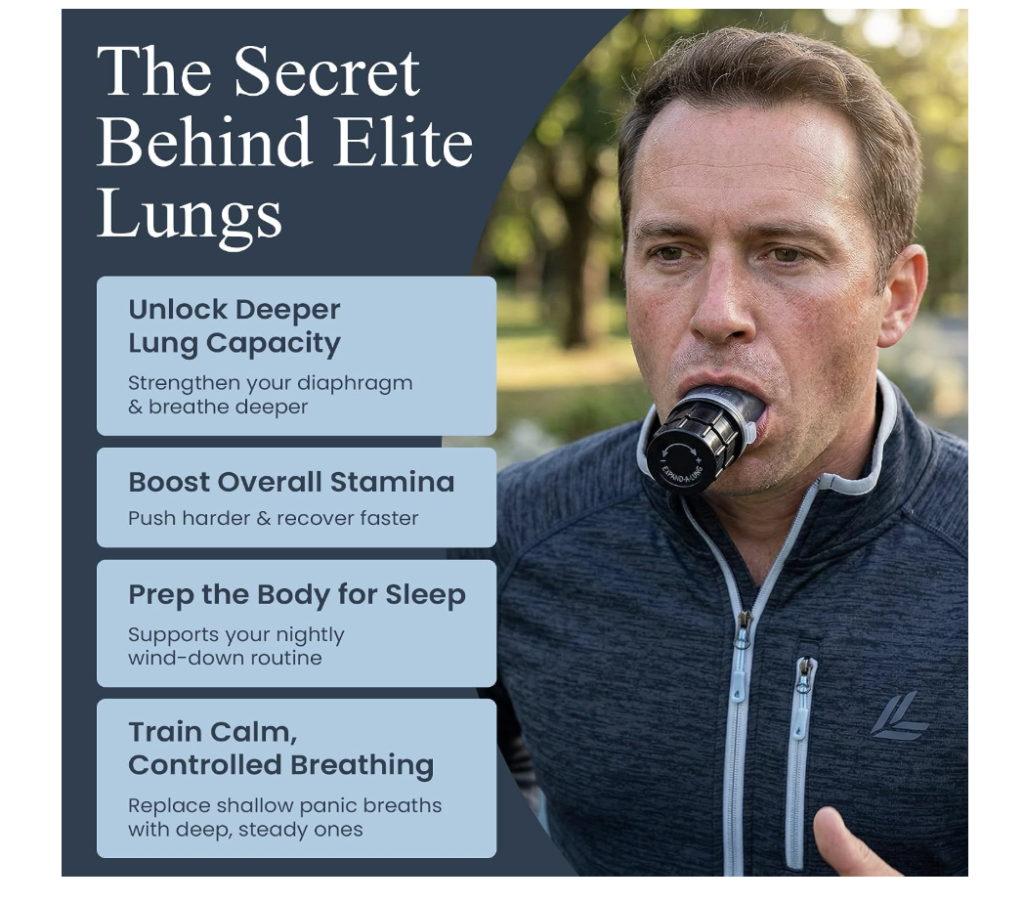
The diaphragm is the primary muscle involved in breathing, but it isn’t working alone. Other muscles around the chest, ribs, abdomen, back, and neck can participate in respiration.
When we exercise, those muscles have more work to do because the body requires more oxygen and needs to remove carbon dioxide more quickly.
Anyone who has walked up a steep hill knows exactly what that feels like.
Suddenly you’re very aware of your breathing.
That’s one reason respiratory muscle training has long been of interest to endurance athletes, swimmers, cyclists, singers, musicians and others whose activities place additional demands on breathing.
But there’s another group that may find the concept worth exploring: adults interested in staying active as they age.
Healthy Aging Changes the Reason We Exercise
At some point, exercise starts becoming less about what we see in the mirror and more about what we want our bodies to keep doing.
I want to be able to go places.
I want enough stamina to enjoy the place once I get there.
I want ordinary physical activity to remain part of my life for as long as possible.
A long walk, a day of sightseeing, gardening, shopping, traveling, dancing, swimming, playing with grandchildren or walking the dog can all require more physical endurance than we realize.
Maintaining conditioning helps preserve those options.
Respiratory muscle exercises aren’t a substitute for walking, strength training, cardiovascular exercise, or other forms of movement. They’re simply another type of training that many of us have probably never considered.
What Is Respiratory Muscle Training?
The basic concept is surprisingly straightforward.
During normal breathing, air flows relatively freely into and out of the lungs. A respiratory muscle training device introduces controlled resistance to that airflow.
Your breathing muscles therefore have to work against resistance.
It’s similar in principle to what happens when you add resistance to other types of exercise, although obviously the muscles and movement involved are completely different.
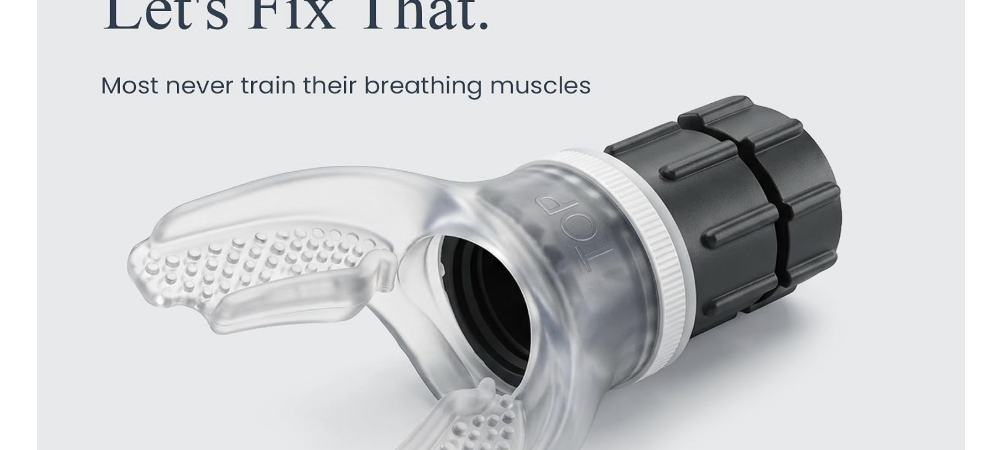
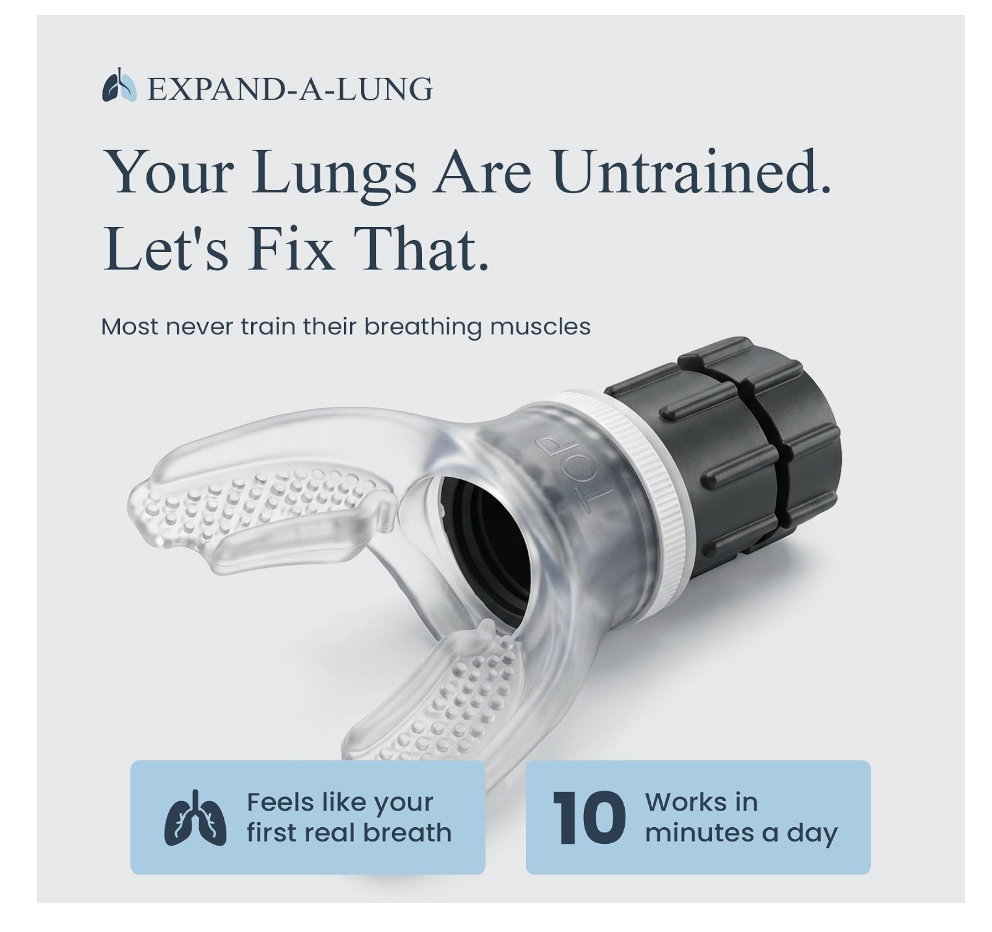
One device designed for this purpose is the Expand-A-Lung Breathing Exerciser, which provides adjustable resistance during both inhalation and exhalation.
LEARN MORE ABOUT THE EXPAND-A-LUNG BREATHING TRAINER
Why I Started Looking at Expand-A-Lung
What interested me initially was how simple the product is.
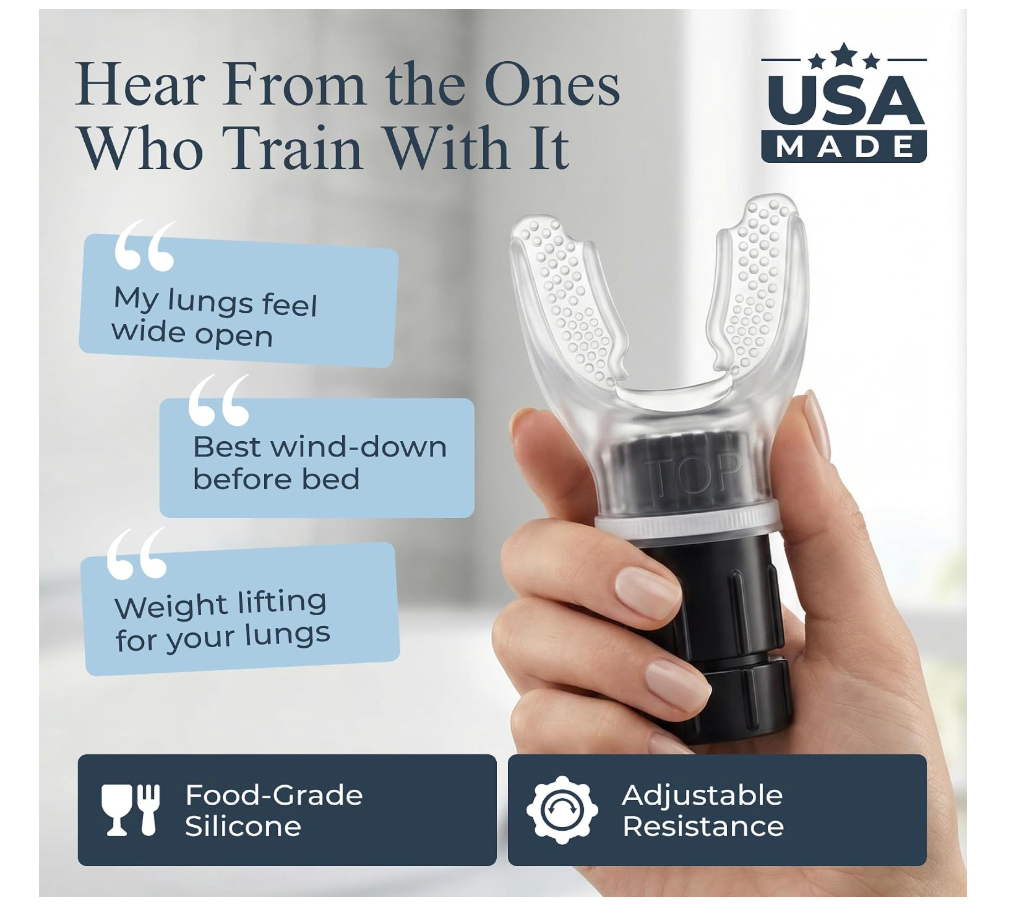
Expand-A-Lung is approximately four inches long and has a soft, food-grade silicone mouthpiece. A single knob controls the resistance level.
That’s basically the device.
There are no batteries, no charging, and no app.
It’s made in the USA by a small family-run business and has been produced since 2004.
The resistance can be adjusted from relatively light for someone just beginning to considerably more challenging levels for experienced users and athletes.
Because it provides resistance while both inhaling and exhaling, one small device can be used to exercise respiratory muscles during both parts of the breathing cycle.
Respiratory Training Doesn’t Have to Be About Athletic Performance
This is the part I think is particularly relevant for older adults.
You don’t have to care about running faster or shaving seconds off an athletic performance to care about maintaining your physical capabilities.
There is tremendous value in ordinary stamina.
Being able to walk comfortably matters. Traveling without feeling completely exhausted matters. Continuing hobbies and activities you enjoy matters.
When we talk about healthy aging, maintaining function deserves at least as much attention as appearance.
Respiratory muscle training is interesting from that perspective because it focuses on a part of physical conditioning we may have spent decades ignoring.
Walking and Breathing Go Hand in Hand
Walking is one of the most accessible forms of exercise, particularly as we get older, but anyone who has increased their walking distance knows that your cardiovascular and respiratory systems quickly become part of the experience.
Add an incline and you’ll notice even faster.
Hiking takes that considerably further. Changes in elevation and longer distances can make breathing feel much more demanding.
Someone who already walks or hikes regularly may therefore be curious about respiratory muscle exercises as an addition to their normal fitness routine.
The important word is addition.
A breathing trainer doesn’t replace physical activity. It targets respiratory muscles in a specific way.
Don’t Forget Singing
Respiratory muscle training also has applications outside traditional fitness.
Singers have always understood something the rest of us can easily overlook: breathing is physical work.
Breath control and support are important for sustained vocal performance. The same is true for musicians playing wind instruments.
That’s one reason Expand-A-Lung isn’t marketed exclusively to athletes. Singers, musicians, public speakers and people interested in breathwork may also find respiratory resistance exercises useful to explore.
For someone entering retirement with more time for hobbies, music, community theater, singing or other creative pursuits, that’s another interesting angle.
CHECK EXPAND-A-LUNG AVAILABILITY ON AMAZON
Breathing Exercises and Breathwork Aren’t Quite the Same Thing
The popularity of breathwork can make this subject slightly confusing.
Many breathwork practices focus on controlling the timing, depth, or pattern of breathing. A respiratory muscle trainer adds actual physical resistance to airflow.
There can certainly be overlap in someone’s wellness routine, but they aren’t identical practices.
You can practice controlled breathing without any equipment whatsoever.
A device such as Expand-A-Lung is specifically designed for resistance exercise.
Understanding that distinction helps keep expectations realistic.
How Expand-A-Lung Fits Into a Daily Routine
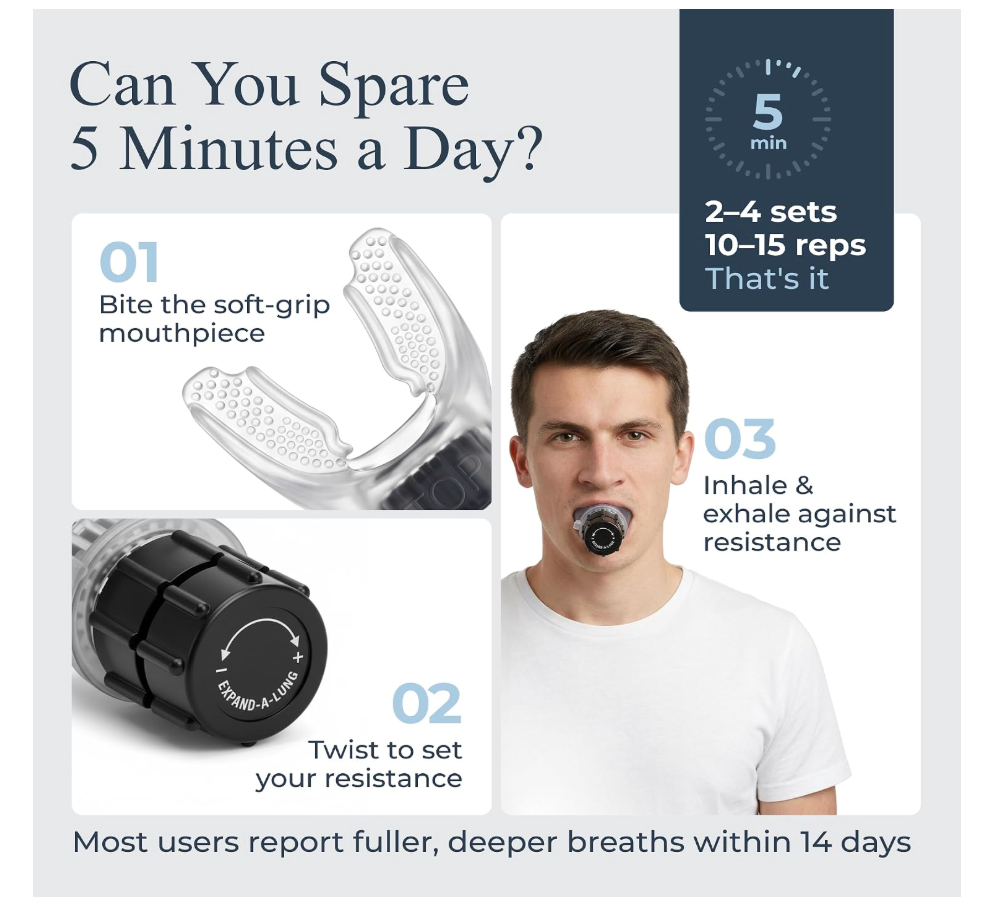
The manufacturer recommends a relatively short routine of approximately 2 to 4 sets of 10 to 15 repetitions per day.
The adjustable resistance allows beginners to start lightly rather than immediately struggling against a difficult setting.
That’s how I would approach any new type of resistance exercise, particularly as we get older. There’s little benefit in turning the first session into a test of willpower.
Controlled, comfortable practice gives you an opportunity to learn how your body responds.
The manufacturer suggests that some users may notice results within two to four weeks of consistent training, but individual results naturally vary.
If something causes dizziness, unusual shortness of breath, lightheadedness, pain, or significant discomfort, stop using it.
A Twenty-Dollar Wellness Tool
At the time of writing, Expand-A-Lung was approximately $19.99 on Amazon, although the current price may change.
That’s one reason I think it is worth discussing.
Healthy-aging products can become expensive very quickly. This is a relatively inexpensive, reusable piece of exercise equipment that doesn’t require accessories, batteries, replacement electronics, or a subscription.
It’s also tiny enough to travel with you.
Of course, affordability doesn’t automatically make something useful. The question is whether it fits your particular goals and whether you’ll actually use it.
For someone curious about respiratory muscle training, however, twenty dollars is a relatively modest entry point.
SEE THE CURRENT EXPAND-A-LUNG PRICE
Breathing Is One Piece of a Much Bigger Picture
I wouldn’t buy a breathing trainer and decide I’d solved healthy aging.
I wish it worked that way.
Maintaining our health and independence as we get older is much less glamorous. It comes from the things we repeatedly do: moving, maintaining strength, eating reasonably well, sleeping, keeping up with healthcare, staying mentally engaged and finding reasons to keep participating in life.
There isn’t one product that replaces those things.
What I do think changes with age is our willingness to pay attention.
Things we barely considered when we were younger suddenly deserve a second look because our priorities have changed. We’re not necessarily trying to become elite athletes. We want our bodies to keep supporting the lives we’re building.
Respiratory muscle strength is one small part of that conversation.
Is a Breathing Trainer Something You Need?
Need is probably too strong a word for most healthy adults.
Interested in trying? That’s a better question.
If you enjoy walking, hiking, swimming, cycling, singing, breathwork, or other activities where breathing and stamina are noticeable parts of the experience, respiratory muscle training may be worth researching.
Expand-A-Lung is one accessible way to experiment with it because the device is inexpensive, adjustable, portable and uncomplicated.
I wouldn’t expect miracles from a four-inch piece of exercise equipment.
But I don’t expect miracles from my walking shoes or hand weights either.
They are tools. Their value comes from how consistently and appropriately we use them.
And as I get older, that’s increasingly how I look at wellness: not searching for one big solution, but finding practical ways to keep myself strong enough to enjoy the life in front of me.
LEARN MORE ABOUT EXPAND-A-LUNG ON AMAZON
Affiliate Disclosure and Health Disclaimer
As an Amazon Associate, I earn from qualifying purchases. This article contains affiliate links, which means I may receive a commission if you purchase through one of my links, at no additional cost to you.
This article is for general informational and educational purposes only and does not constitute medical advice. Respiratory muscle training devices are not intended to diagnose, treat, cure, or prevent asthma, COPD, sleep apnea, or any other disease or medical condition. Anyone with a respiratory condition, cardiovascular condition, unexplained breathing difficulty, or concerns about beginning respiratory resistance exercises should consult a qualified healthcare professional before using a breathing training device.